
Abstract
New drugs are mostly obtained from Natural sources. The traditional and ethic medicines have provided evidence on the therapeutic properties and resulted in some distinguished drug discovery of natural products. The microorganisms and the endogenous active materials from human or animal have also become a significant approach to the discovery of a drug. Bioinformatics and artificial intelligence have facilitated the study and development of products. For discovery of natural products different software have been used. Different computational software needed in the future for the predicting features in new drug development, for instance pharmacokinetic and pharmacodynamics, in drug development lead positive impact. This review focus on natural product drug discovery and uses innovative strategies and techniques as a part of discovery of drugs from natural products.
Key Words
Essential Products, Drug Development and Design, Discovery, Strategies, Omics.
Introduction
Natural products have been used as a source of medicine in all cultures since times immemorial (C. K. Ong, 2005). In many parts of the world including the Asia (Duraipandiyan, 2006) South America (Bolzani, 2012) and Africa (Khalid, 2012), numerous diseases have been treated using the natural flora and some of the plant species are still used in many human communities for improving the overall health of the society. Traditional medicines are thought to be effective and having little adverse effects therefore they are accepted in most of the world avoiding cultural differences(Verma, 2008). Around 35000 species of plants are key drugs in numerous cultures because of their therapeutic effects (Lewington, 1993) and extracts of the plants constitute the 80% needs of the medicines providing primary healthcare (Sandhya, 2006). Eventually, researchers are focus on combinatorial effects of chemicals not just single compounds. By using -omics techniques these combinations will investigated, and effects will be observed in genes and cellular mechanism. Drug discovery from natural products computational analysis has allowed testing of plant extracts. Development of new analytical and bio-informatics techniques, will lead new structures , designs of compounds and biological testing of these products (Medema & Fischbach, 2015). Later in this review we will discuss major techniques and innovations presently working in these places. For development of plant based natural products –omics strategies are used and allow testing of big data of compounds obtain from natural sources.
History of Natural Products
Numerous diseases are treated, prevented, cured by the use of the botanical medicines in the past using the plant seeds, leaves, berries, bark, and roots. (Philipeon, 2001)(Kong, 2003). Global attention is required to the leading root cause of death now a days i.e. Infectious disease (Westh, 2004). Many antibiotics used today have decreased therapeutic efficacy because of the development of the drug resistance (Bandow, 2003). In the history of the mankind botanical medicines have been used a lot to treat various infectious diseases. Pure or standardized extracts of the natural products of the plants makes it possible to provide a diversity of new drugs because of the chemical diversity of their structures. Antimicrobial compounds must be discovered that have variety of chemical groups and novel mechanism of action (Rojas, 2003 ).
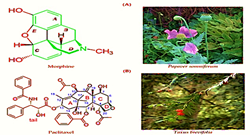
Some examples of natural products that are used for treatment of diseases. (A) From Papaver somniferum plant morphine is obtained (B) From Taxus brevifolia plant paclitaxel is isolated.

| Drug width="208">Plant width="208">Activity | > Morphine width="208">Papaver Somniferum width="208">Powerful pain reliever & narcotic | > Quinine width="208">Cinchona sp. width="208">Anti-malarial | > Taxol width="208">Taxus Brevifollis width="208">Anti-cancerous | > Vincristine width="208">Catharanthus Rosesus width="208">Anti-cancerous | > Serpentine width="208">Rauwolfia Serpentina width="208">Hypertension |
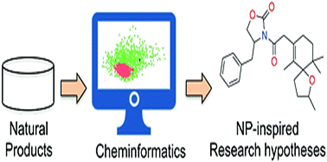
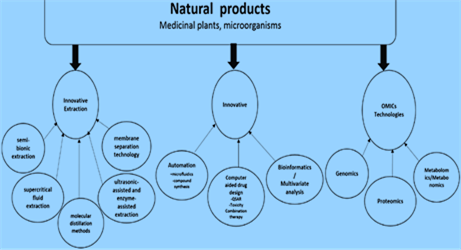
Innovative techniques for drug discovery from natural products. Advantages of these strategies show the way to novel drug applicants obtained from plants.

Discovery of Drugs from Natural Products through Automating Process
Automation is commonly concerned with negative thoughts, a number of peoples associating automation with lack of employment and unavailable outcomes. In the drug automation process however, it has been worked speed up in achievements. Several pharmaceutical companies already have high through put trials in the discovery of products(Chapman, 2003).Soft wares are used to obtain synthetic designs of compounds (e.g software ADME and EVE are used to hit and find the targets).New software are useful to decrease problematic false positive in addition to make less product absorption during compound testing, and biological synthesis. E g many pharmaceutical companies use software to design, synthesis and screening of compounds and microfluids system to maintain liquids and balance heat for purification of compound(MacConnell, 2017). In development of new compound technology i.e. artificial intelligence are major source.These technologies reduce the human mistakes made during drug design and optimization, for testing of candidate compound reduced time to days and permit the recapitulation of disease biology more correctly than in vitro (Eglen, 2015).Several times techniques and innovations never gives expected results. For drug discovery automation and innovation should be workable for long term and speedy(Özdemir V. &.-s.-6., 2017).Automation will give ideas to scientists about selection of drug design of compound and their ADMET properties. For more effective results automated generators are used for drug discovery of compound. To observe drug target molecule ADMET properties of novel drugs must be observed by using different software. Several models can be used to observe binding affinity of compound in the course of drug discovery. By using computer assisted de novo design many compounds having imidazopyridine scaffold discover ligands for G-protein couple receptors antagonist(Reutlinger, 2014). Virtual library can be used for design compound and building block selection. Scientist are using computational activities and microfluidics assisted synthesis gives identification of ligands and binding profiles(Benzaquen, 2015). In compound synthesis automation availability of building blocks and chemical reaction play important role to gives by products. For product synthesis 3D printing permit buildings for microfluidics devices.3D printing is useful in microfluidics system for those who have limited functions.one of latest invention is automated robotic synthesis controlled remotely and gives convenient results. Compound based on microfluidics gives batch wise synthesis(Stalder R. &.-1., 2013).Chemo transformation of compound replaced by invitro identification in future. (e.g. cytochrome P450 -catalytic oxidation of drugs now it can be simulated). In drug discovery automation microfluidics-based compounds compelled with in-process analysis. In order to prevent humans from harmful effects of reagents, microfluidics-based compounds are used(Chin, 2009). Few cancer models are under process to epitomize human tumors. Many consolidated test platforms and microfluidics-assisted synthesis are present, combine compound and selection of reagents and accept availability of material during testing of compound and synthesis. For automated compound synthesis different networks and tools are established that are helpful with innovative base for compound synthesis. Drug design from artificial intelligence must have suitable drug discovery process. Machine can also design compound based on hypothesis using different criteria (biological process and side effects.
Computer -Aided Drug Design from Natural Products
Several global health issue can overcome from synthetic compounds obtain from natural products. Whereas, some newly discovered synthetic compounds are rejected that are not compatible with drug design(Congreve, 2003). By using computer-aided design many agents like anticancer drugs were discovered from synthetic compounds(Elumalai, 2015).To generate virtual fragments of molecules through complex natural products by using software such as The scaffold Hunter(Boehm, 2011).By using computational software visual molecular activity of compound must be same as parent compound. Those molecules that are obtain from natural products having weaker activities as compared to mother compound. Many marine alkaloids have anticancer properties which are visualized by PASS software.(Lagunin, 2000).Indeed several individual compounds from St John’s wort were also predicted rightly to have cytochrome P450 modulating effects (Rodrigues T. R., 2016).For study of new compound and natural products to find target of new compound-protein coupled receptor ligand achieved by SPIDER software. To describe therapeutic values and positive activities, computer-based tools are engaged with natural product drug discovery. Computer based drug design provides optimization of lead compound with increase pharmacokinetics properties in a positive aspect.
Utilizing potential of natural product in drug discovery from cheminformatics point of view(Rodrigues T. , 2017).

New approaches have been developed about toxicity of lead compound during drug discovery, such as in silico method if combination with in vivo and invitro testing can reduce time consumption of drug discovery and give efficient results. One drug one target is basic strategy of drug discovery (Baselga, 2012), so drug design is based on combinatorial perspective to obtain cure. Ordinary target therapies (kinase inhibitor) combined with anti-cancer agents (Swain, 2013).
Precision Medicine and Natural Products
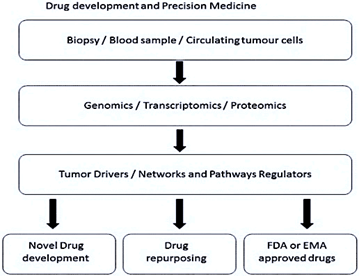
Few years ago, discovery of genomics informing drugs were not clinically relevant. This is because of complex nature of diseases. For the speedy identification and interpretation advance technology and analytical devices are used in genomics. For better cure precision medicine target specific feature. For the transformation of genetics, the oncologists and cancer scientists show a lot of animations. New approaches are increasing analysis of genomes in individuals and patients. It is necessary to link clinical presentation and patient’s genome. Now-a-days investigation of drug target and specific protein are operating on its peak. It is observed in gene to screen approach that the cells of phenotype relay on genes(Debouck, 2009).Genomes wide associated studies (GWAS) compared genomes of healthy individual with unhealthy individuals, also shows mechanism that cause genetic diseases.
Different therapies are used to affect cancer cells. Through gene expression profiling and proteomics biomarkers of these cells can be identified.

Drug Discovery from Natural Sources using OMICS Technologies
Genomics Methods in Natural Products Identification
For a successful drug discovery from natural products it is very important to properly identify the species from which the natural products will be obtained. The therapeutic value will be affected in case of using wrong or different species and this is because of the various components and quantities in that particular specie. Genomic technologies are very essential in developing a precise identification method for natural products .An example of genomic methods is DNA barcoding techniques which depend on the standard DNA regions for the identification of the species (Ganie S.H. U. P., 2015).DNA barcoding methods will give a much higher quality identification compared to other traditional methods. DNA barcoding method was used before in the identification of plant based natural products such as Amaranthus hybridus L. Andalso, has been used in Japanese pharmacopeia through ITS2 or PsbA-trnH sequence amplification (Chen X., 2017). The use of bio-farming will provide consistency after identifying the desired natural species using DNA barcoding technique (Pulice G., 2016). Bio-markers that are formed by using genomic methods can also be combined with DNA chips to spread a good and effective tool up for authentication of the natural products species (Gantait S., 2014). Another very innovative method is called Gene expression through microarray, which allows a quick and precise analysis of a number of transcripts (Lv C., 2017), (Lee K.-H., 2014).
Genomics are not used just for natural products identification; in fact, it is also used in the discovery of drug targets. Proteins modification, variation of the DNA structure and also the transcription factor binding site can, nowadays, be measured at the genome level (Jones M.J., 2015), (Kelly T.K., 2012), (Zykovich A., 2014). These genomic technologies together provided the shortening of the time that is required for the drug discovery process (Fishilevich S., 2017), (Yang T.Y., 2014).
Validation of Natural Products through Proteomics
The proteomics are used for a precise control and effective validation by explaining the mode of action of natural compounds. For drug discovery of compound natural species have the ability to clarify the genomic function and mechanism (Martínez-Esteso M.J., 2015). Like the case in genomics, the proteomic technologies are also used in identifying a number of target proteins for individual specie (Chang J., 2016), (Schirle M., 2012). The identification of target proteins is very important for the drug discovery using natural products. For this purpose, different techniques can be used such as affinity chromatography, mass spectrometry, etc. The chromatographic method is considered as an effective and successful technique for identifying target proteins. The advantage of these technologies is to identify target proteins without changing the natural species, which will allow us to have the natural species with high activity value (Guan D., 2014), (Novick D., 2012), (Pfaunmiller E.L., 2013). Mass spectrometry is also used in the clarification and identification of a bound protein. The changes in the natural species after the analysis can lead to a reduction in their therapeutic activity. For this purpose, developing new innovative technologies that do not cause any modification is critical for a successful identification of the target (Rix U., 2009), (Lee H., 2016).
Metabolomics and Metabonomics
The Metabolomic side of natural species requires identification of the metabolites’ characteristics. On the other hand, the Metabonomics focus on the estimation of the international and effective pathways of the organization to the biological trigger (Nicholson J.K., 2008),(Ousterout D.G., 2012), (L., 1973). In the past, the scientists used to focus on the Metabolomics in the drug discovery to clarify and identify Metabolites, but nowadays, they are also working on the term ‘Metabonomics’ to study the functions of the biological systems and also their therapeutic effects. This will combine both biological effects and the pharmacological effects on the systems (figure 5).
Metabolomic technologies including UPLC-MS can give an identification of the components in the natural species that brings about the therapeutic effects on herb e.g. Cassia abbrevlata (Yan T., 2015), Metabolomics as well as Metabonomics techniques including NMR, MS and UPLC will provide information about the pharmacodynamics, pharmacokinetics as well as the toxicity of the natural species which will further ensure an effective drug discovery process from nature products.
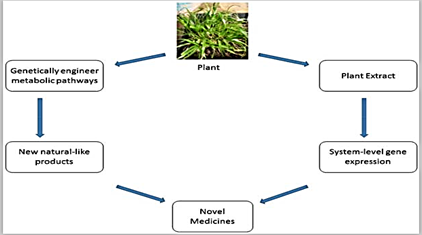
Plant-based natural products in the developing of new medicines using plant extract

Conclusion
The low-down success rate in the discovery of natural products needs new strategies and techniques. The new drug development obtains from elucidating stimulation from up to date species to be used for treatment of different diseases. The importance of natural species in the treatment of different diseases cannot be so confirmed. The technology is improving day by day and has already helped in the understanding of the drug discovery process, using complex natural products. Today, there are an impressive number of drugs available in the markets that have been produced from natural sources. This makes the natural product drug discovery as an important part of the drug discovery process. One of the major factors in natural product discovery is that can affect the global health and help in solving the global health challenges.
References
- Akbulut, Y., Gaunt, H., Muraki, K., Ludlow, M., Amer, M., Bruns, A., et al. (2015). (-)-Englerin A is a potent and selective activator of TRPC4 and TRPC5 calcium channels. pp. 3787-3791.
- Bandow, J. H. (2003). Proteomic approach to understanding antibiotic action. . pp. 948-955.
- Baselga, J. C.-1. (2012). Baselga, J., Cortés, J., Kim, S. B., Im, S. A., Hegg, R., Im, Y. H., ... & Clark, E. Pertuzumab plus trastuzumab plus docetaxel for metastatic breast cancer. New England Journal of Medicine, 366(2), 109-119. pp. 109-119.
- Benkeblia, N. (2004). Antimicrobial activity of essential oil extracts of various onions (Allium cepa) and garlic (Allium sativum). pp. 263-268
- Benzaquen, M. G. (2015). Benzaquen, M., Galvão, K. N., Coleman, A. E., Santos, J. E. P., Goff, J. P., & Risco, C. A. Effect of oral mineral and energy supplementation on blood mineral concentrations, energetic and inflammatory profile, and milk yield in dairy cows affecte. pp. 186-191.
- Boehm, M. V.-3. (2011). Boehm, M. Virtual Screening of Chemical Space: From Generic Compound Collections to Tailored Screening Libraries. Virtual Screening. Principles, Challenges, and Practical Guidelines, 1, 3-33. pp. 3-33.
- Bolzani, V. d. (2012). Natural products from Brazilian biodiversity as a source of new models for medicinal chemistry. . pp. 1837-1846.
- Bumpus S.B., E. B. (2009). A proteomics approach to discovery of natural products and their biosynthetic pathways. Nat. Biotechnol. pp. 951-956.
- Buriani A., G.-B. M.-C. (2012). Omic techniques in systems biology approaches to traditional Chinese medicine research . pp. 535-544.
- C. K. Ong, G. B. (2005). WHO Global Atlas of Traditional, Complementary and Alternative Medicine. pp. 165- 169.
- cancer., P. p. (2012). Pertuzumab plus trastuzumab plus docetaxel for metastatic breast cancer. pp. 109-119.
- Century., A. r.-c. (2013). pp. 795-802.
- Chang J., K. Y. (2016). Advances in identification and validation of protein targets of natural products without chemical modification. Nat. Prod. Rep. pp. 719-730.
- Chapman, T. L.-6. (2003). Chapman, T. Lab automation and robotics: Automation on the move. Nature, 421(6923), 661-663. pp. 661-663.
- chemistry., C. w. (2014). Coping with polypharmacology by computational medicinal chemistry. pp. 648-653.
- Chen X., X. L. (2017). Identification of crude drugs in the Japanese pharmacopoeia using a DNA barcoding system. Sci. Rep.
- Chin, P. B.-8. (2009). Chin, P., Barney, W. S., & Pindzola, B. A. Microstructured reactors as tools for the intensification of pharmaceutical reactions and processes. Current opinion in drug discovery & development, 12(6), 848-861.. . pp. 848-861.
- Congreve, M. C.-b.-8. (2003). Congreve, M., Carr, R., Murray, C., & Jhoti, H. A'rule of three'for fragment-based lead discovery?. Drug discovery today, 19(8), 876-877. pp. 876-877.
- Debouck, C. ..-1. (2009). Debouck, C. . Integrating genomics across drug discovery and development. Toxicology letters, 186(1), 9-12. pp. 9-12.
- design., C. o. (2016). Counting on natural products for drug design. pp. 531-541.
- Development., D. B.-S. (2017). David Bowie and the Art of Slow Innovation: A Fast-Second Winner Strategy for Biotechnology and Precision Medicine Global Development. pp. 633-637.
- development., I. g. (2009). Integrating genomics across drug discovery and development. pp. 9-12.
- discovery., A. '.-b. (2003). A 'rule of three' for fragment-based lead discovery. pp. 876-877.
- Duraipandiyan, V. M. (2006). Antimicrobial activity of some ethnomedicinal plants used by Palyar tribe from Tamil Nadu, India. pp. 35-41.
- Eglen, R. M.-d.-t.-2. (2015). Eglen, R. M., & Randle, D. H. . Drug discovery goes three-dimensional: goodbye to flat high-throughput screening?. Assay and drug development technologies, 13(5), 262-265. pp. 262-265.
- Elumalai, N. B.-4. (2015). Elumalai, N., Berg, A., Natarajan, K., Scharow, A., & Berg, T. Nanomolar inhibitors of the transcription factor STAT5b with high selectivity over STAT5a. Angewandte Chemie, 127(16), 4840-4845. pp. 4840-4845.
- field., A. a.-e. (2015). pp. 2695-2703.
- Fishilevich S., N. R. (2017). Genehancer: Genome-wide integration of enhancers and target genes in genecards. Database. .
- Ganie S.H., U. P. (2015). Authentication of medicinal plants by DNA markers. Plant Gene. . pp. 83-99.
- Ganie S.H., U. P., & 4:83'99. (2015). Authentication of medicinal plants by DNA markers. . pp. 83-99.
- Gupta. R., B. G. (2005). Nature's Medicines: Traditional Knowledge and Intellectual Property Management. pp. 203-219.
- Gurib-Fakim, A. (2005). Medicinal plants: Traditions of yesterday and drugs of tomorrow. . pp. 1-93.
- Hunter., n. e. (2009). nteractive exploration of chemical space with Scaffold Hunter. pp. 581-583.
- Incidence of central nervous system metastases in patients with HER2-positive metastatic breast cancer treated with pertuzumab, t. a. (2014). ab, trastuzumab, and docetaxel: results from the randomized phase III study CLEOPATRA. pp. 1116-1121.
- Iwu, M. W. (1999). New antimicrobials of plant origin. pp. 457-462.
- Jigna, P. a. (2007). In vitro antimicrobial activity and phytochemical analysis of some Indian Medicinal plants. . pp. 53-58.
- Jones M.J., G. S. (2015). DNA methylation and healthy human aging. Aging Cell. pp. 924-932.
- Kelly T.K., L. Y. (2012). Genome-wide mapping of nucleosome positioning and DNA methylation within individual DNA molecules. Genome Res. pp. 2497-2506.
- Khalid, H. W. (2012). Gems from traditional north-African medicine: medicinal and aromatic plants from Sudan. . pp. 92-103.
- Kong, J. M. (2003). Recent advances in traditional plants drugs and orchids. pp. 7-21.
- L., S. (1973). Genetic manipulation: Now is the time to consider controls. Sci. Forum. . pp. 7-11.
- Lagunin, A. S.-7. (2000). Lagunin, A., Stepanchikova, A., Filimonov, D., & Poroikov, V. PASS: prediction of activity spectra for biologically active substances. Bioinformatics, 16(8), 747-748. pp. 747-748.
- Leads., I. V.-b.-b. (2015). Incorporating Virtual Reactions into a Logic-based Ligand-based Virtual Screening Method to Discover New Leads. pp. 615-625.
- learning., D. (2015). Deep learning. pp. 436-444.
- Lee H., L. J. (2016). Target identification for biologically active small molecules using chemical biology approaches. Arch. Pharm. Res. pp. 1193-1201.
- Lee K.-H., L. H.-L.-C.-Y.-M. (2014). A gene expression signature-based approach reveals the mechanisms of action of the Chinese herbal medicine Berberine. Sci. Rep.
- Lewington, A. (1993). A review of the importation of medicinal plants and plant extracts into Europe. .
- Libraries., I. P.-P.-T. (2017). pp. 461-465.
- ligands., C. o.-c. (2014). Combining on-chip synthesis of a focused combinatorial library with computational target prediction reveals imidazopyridine GPCR ligands.
- Lv C., W. X. (2017). The gene expression profiles in response to 102 traditional Chinese medicine (TCM) components: A general template for research on TCMs. Sci. Rep.
- MacConnell, A. B.-e.-1. (2017). MacConnell, A. B., Price, A. K., & Paegel, B. M. . An integrated microfluidic processor for DNA-encoded combinatorial library functional screening. ACS combinatorial science, 19(3), 181-192. pp. 181-192.
- MartÃÂnez-Esteso M.J., M.-M. A.-M.-C.-M. (2015). The role of proteomics in progressing insights into plant secondary metabolism. Front. Plant Sci.
- Medema, M., & Fischbach, M. (2015). Computational approaches to natural product discovery. pp. 639-648.
- metabolites., P. m. (2013). pp. 1119-1123.
- Nature., C. T., & 10.1038/421661a, 4.-6. d. (2003). Chapman T. Lab automation and robotics: Automation on the move. Nature. ;421:661-666. doi: 10.1038/421661a . pp. 661-666.
- Nature., p. C., & 421:661-666. (2003). T. Lab automation and robotics: Automation on the move. Nature. ;421:661-666 . pp. 661-666.
- Nicholson J.K., L. J. (2008). Systems biology: Metabonomics. Nature.
- Novick D., R. M. (2012). Ligand affinity chromatography, an indispensable method for the purification of soluble cytokine receptors and binding proteins. Methods Mol. Biol. pp. 195-21
- Ousterout D.G., G. C. (2012). Advances in targeted genome editing. Curr. Opin. Chem. Biol. pp. 268-277.
- Özdemir, V. &.-s.-6. (2017). Özdemir, V., & Patrinos, G. P. David bowie and the art of slow innovation: A fast- second winner strategy for biotechnology and precision medicine global development. OMICS: A Journal of Integrative Biology, 21(11), 633-637. pp. 633-637.
- Pertuzumab, t. a.-p.-b.-c. (2013). Pertuzumab, trastuzumab, and docetaxel for HER2-positive metastatic breast cancer (CLEOPATRA study): overall survival results from a randomised, double-blind, placebo- controlled, phase 3 study. pp. 461-471.
- Pfaunmiller E.L., P. M. (2013). Affinity monolith chromatography: A review of principles and recent analytical applications. Anal. Bioanal. Chem. pp. 2133-2145.
- Philipeon, J. D. (2001). Phytochemistry and medicinal plants. . pp. 237-243.
- processes., M. r. (2009). Microstructured reactors as tools for the intensification of pharmaceutical reactions and processes. pp. 848-861.
- Pulice G., P. S.-H. (2016). Molecular farming in Artemisia annua, a promising approach to improve anti-malarial drug production. Front. Plant Sci.
- Quinn, R. J.-l.-4. (2008). Quinn, R. J., Carroll, A. R., Pham, N. B., Baron, P., Palframan, M. E., Suraweera, L., ... & Muresan, S. . Developing a drug-like natural product library. Journal of Natural Products, 71(3), 464-468. pp. 464-468.
- R.J. Quinn, e. a. (2008). R.J. Quinn, et al.Developing a drug like natural product library. pp. 464-468.
- Reutlinger, M. R.-C. (2014). Reutlinger, M., Rodrigues, T., Schneider, P., & Schneider, G. Combining On-Chip Synthesis of a Focused Combinatorial Library with Computational Target Prediction Reveals Imidazopyridine GPCR Ligands. Angewandte Chemie International Edition, 53(2),. pp. 582-585.
- Rix U., S.-F. G. (2009). Target profiling of small molecules by chemical proteomics. Nat. Chem. Biol. . pp. 616-624.
- Rodrigues, T. (2017). Harnessing the potential of natural products in drug discovery from a cheminformatics vantage point.
- Rodrigues, T. R. (2016). Rodrigues, T., Reker, D., Schneider, P., & Schneider, G. (. Counting on natural products for drug design. Nature chemistry, 8(6), 531.
- Rojas, R. B. (2003 ). Antimicrobial activity of selected Peruvian medicinal plants. pp. 199-204.
- S.Wu, e. a.-c.-c.-t. (2007). S.Wu,et al multi-channel counter-current chromatography for high-throughput fraction of natural products for drug discovery. pp. 99-107.
- Sandhya, B. S. (2006). Ethnomedicinal plants used by the Valaiyan community of Piranmalai Hills (Reserved Forest), Tamil Nadu, India. . pp. 101-114.
- Schirle M., B. M. (2012). Mass spectrometry-based proteomics in preclinical drug discovery. Chem. Biol. pp. 72-84.
- Screening., a. D.-D.-T. (2015). Discovery Goes Three-Dimensional: Goodbye to Flat High-Throughput Screening.
- Screening., A. I.-E. (2017). An Integrated Microfluidic Processor for DNA-Encoded Combinatorial Library Functional Screening. pp. 181-192
- Singh, S. B.-f.-1. (2006). Singh, S. B., & Barrett, J. F. Empirical antibacterial drug discovery'foundation in natural products. Biochemical pharmacology, 71(7), 1006-1015. ,. pp. 1006-1015.
- Sparkes A., A. W., & 2:1. (2010).
- Stalder, R. &.-1. (2013). Stalder, R., & Roth, G. P. Preparative microfluidic electrosynthesis of drug metabolites. ACS medicinal chemistry letters, 4(11), 1119-1123. pp. 1119-1123
- STAT5a., N. i. (2015). Nanomolar inhibitors of the transcription factor STAT5b with high selectivity over STAT5a. pp. 4758-4763.
- substances., P. p. (2000). PASS: prediction of activity spectra for biologically active substances. pp. 747-748.
- Swain, S. M.-p.-b. (2013). Swain, S. M., Kim, S. B., Cortés, J., Ro, J., Semiglazov, V., Campone, M., ... & Clark, E. Pertuzumab, trastuzumab, and docetaxel for HER2-positive metastatic breast cancer (CLEOPATRA study): overall survival results from a randomised, double-blin. pp. 461-471.
- techniques S.B. Singh, J. B.-f. (2006). techniques S.B. Singh, J.F. Barrett Emperical antibacterial drug discovery- foundation in natural products. pp. 1006-1015
- the species Ganie S.H., U. P., & 4:83'99. (2015). Authentication of medicinal plants by DNA markers. pp. 83- 99.
- University., T. t.-o.-o. (2002). Teaching target-oriented and diversity-oriented organic synthesis at Harvard University. pp. 535-541.
- Verma, S. a. (2008). Current and future status of herbal medicines. . pp. 347-350.
- Westh, H. C. (2004). An international multicenter study of antimicrobial consumption and resistance in Staphylococcus aureus isolates from 15 hospitals in 14 countries. . pp. 169-176.
- Wu, S. Y.-c.-c.-t.-2.-1. (2008). Wu, S., Yang, L., Gao, Y., Liu, X., & Liu, F. . Multi-channel counter-current chromatography for high-throughput fractionation of natural products for drug discovery. Journal of chromatography A, 1180(1-2), 99-107. pp. 99-107.
- Xie G., P. R. (2008). Ultra-performance LC/TOF MS analysis of medicinal Panax herbs for metabolomic research. J. Sep. Sci. pp. 1015-1026.
- Yan T., F. Q. (2015). UPLC-MS/MS determination of ephedrine, methylephedrine, amygdalin and glycyrrhizic acid in beagle plasma and its application to a pharmacokinetic study after oral administration of Ma Huang Tang. Drug. Test. Anal. pp. 158-163.
- Yang T.Y., H. L. (2014). Comparison of genome-wide DNA methylation in urothelial carcinomas of patients with and without arsenic exposure. Environ. Res. pp. 57-63.
- Yaseen, G. M.-R. (2015). Ethnobotany of medicinal plants in the Thar desert (Sindh) of Pakistan. . pp. 43-59.
- Zykovich A., H. A. (2014). Genome-wide DNA methylation changes with age in disease-free human skeletal muscle. Aging Cell. . pp. 360-366.
Cite this article
-
APA : Ali, P. A., Hanif, F., & Nettour, H. (2017). Strategies and Techniques of Drug Discovery from Natural Products. Global Drug Design & Development Review, II(I), 34-43. https://doi.org/10.31703/gdddr.2017(II-I).04
-
CHICAGO : Ali, Parniya Akbar, Farah Hanif, and Hosna Nettour. 2017. "Strategies and Techniques of Drug Discovery from Natural Products." Global Drug Design & Development Review, II (I): 34-43 doi: 10.31703/gdddr.2017(II-I).04
-
HARVARD : ALI, P. A., HANIF, F. & NETTOUR, H. 2017. Strategies and Techniques of Drug Discovery from Natural Products. Global Drug Design & Development Review, II, 34-43.
-
MHRA : Ali, Parniya Akbar, Farah Hanif, and Hosna Nettour. 2017. "Strategies and Techniques of Drug Discovery from Natural Products." Global Drug Design & Development Review, II: 34-43
-
MLA : Ali, Parniya Akbar, Farah Hanif, and Hosna Nettour. "Strategies and Techniques of Drug Discovery from Natural Products." Global Drug Design & Development Review, II.I (2017): 34-43 Print.
-
OXFORD : Ali, Parniya Akbar, Hanif, Farah, and Nettour, Hosna (2017), "Strategies and Techniques of Drug Discovery from Natural Products", Global Drug Design & Development Review, II (I), 34-43
-
TURABIAN : Ali, Parniya Akbar, Farah Hanif, and Hosna Nettour. "Strategies and Techniques of Drug Discovery from Natural Products." Global Drug Design & Development Review II, no. I (2017): 34-43. https://doi.org/10.31703/gdddr.2017(II-I).04